Astra Can Build Anything, So People Asked It for Dust2
Six of the twelve games added to the Astra catalogue in one day are recreations of games that already exist, and the catalogue’s second most-starred entry is a PS2 port. The originals in the same batch are more interesting and travel nowhere. A look at why a borrowed design ships with its specification already written, and what the most-starred entry did differently by not being a game at all.
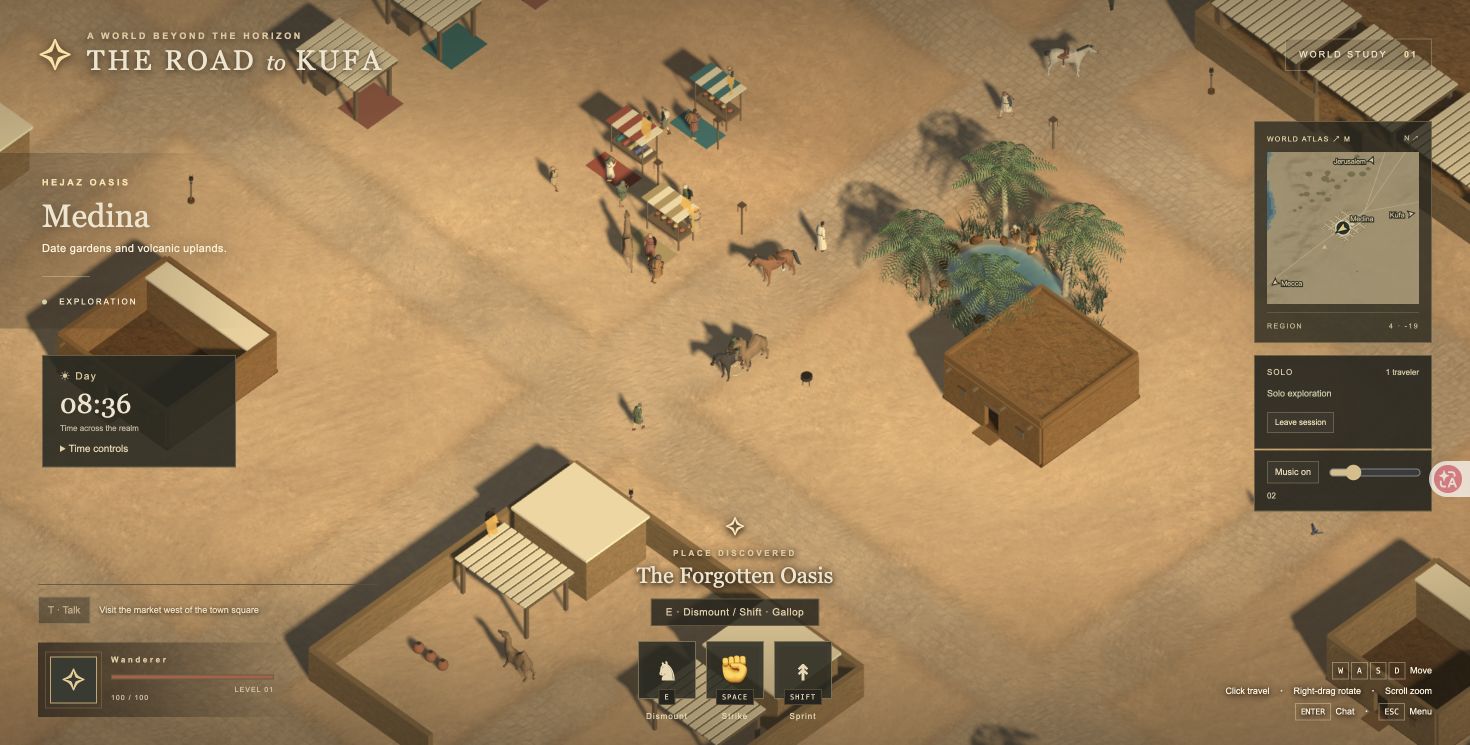
TL;DR — Ask a model that can build almost anything to build something, and people overwhelmingly ask it for a game that already exists. Counting the twelve entries added to the Astra catalogue on 2026-09-15, six are recreations or close-lineage copies — Dust2, Fruit Ninja, a Hollow Knight-shaped roguelite. Read alongside the earlier arrivals — a Simpsons driving game, a Sonic prototype, an Uma Musume auto-battler — the pattern is the story. The most-starred entry in the whole catalogue is a PS2 port. The one nobody copied is also the one that looks least like a game.
The twelve, sorted by how much they borrow
| Recreates something | Its own thing |
|---|---|
| DUST II · Desert Operations | The Road to Kufa |
| Fruit Ninja Dojo | Last Train to the Sea |
| Thornwake (Hollow Knight lineage) | Infinite Garden |
| Nightborn Clash (arena fighter) | Vesper: The Last Light |
| Hot Wheeler (toy-car stunt genre) | Dual Realms |
| Pixel Orchard (memory game) | Land, If You Can |
Six and six, and the split is not subtle. On the left, you know what the thing is before it loads. On the right, you have to be told.
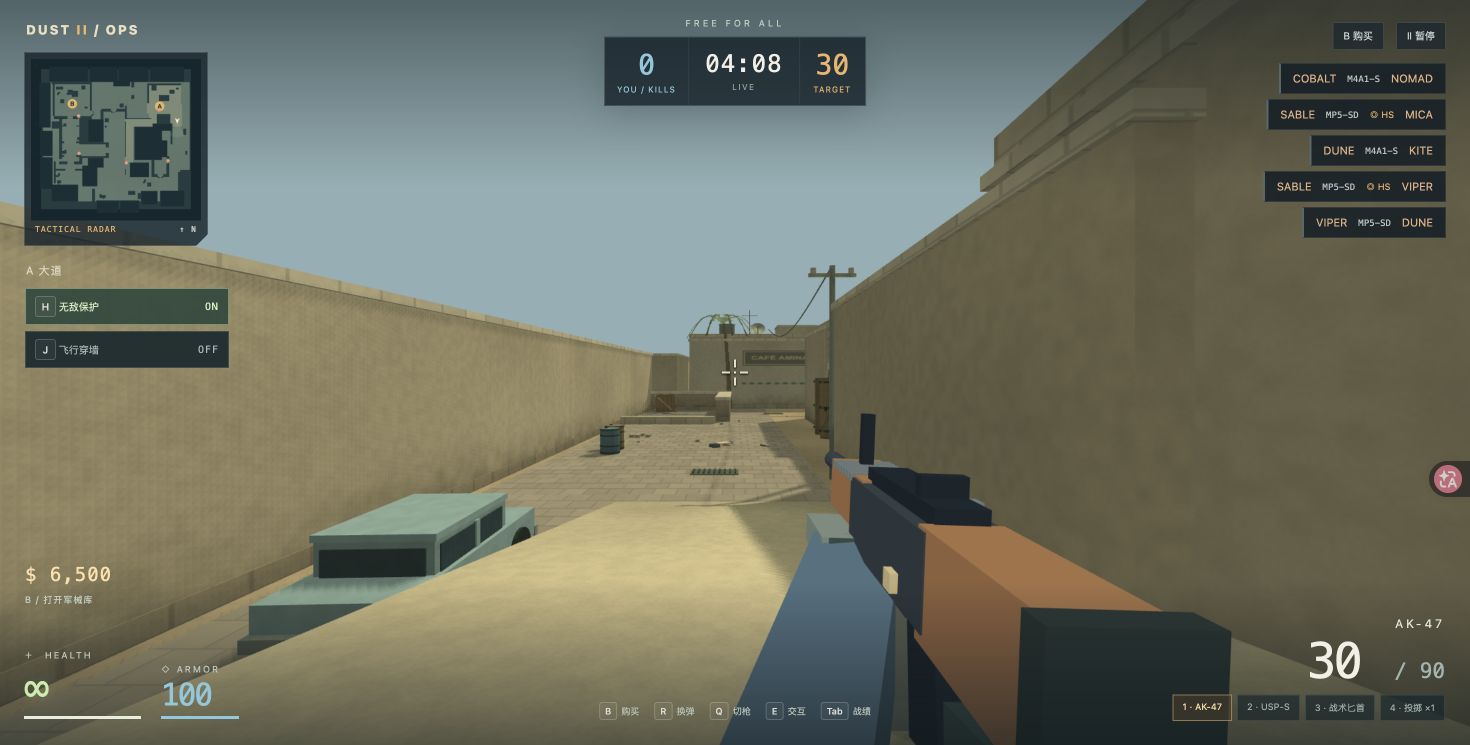
DUST II · Desert Operations is the clearest case. Not a shooter inspired by Counter-Strike — that map, the one with the double doors and the long A, rebuilt for a browser with four modes and bot opponents. Its creator also published the original map and prompts on linux.do, which makes it the only one of the twelve you could rebuild yourself.
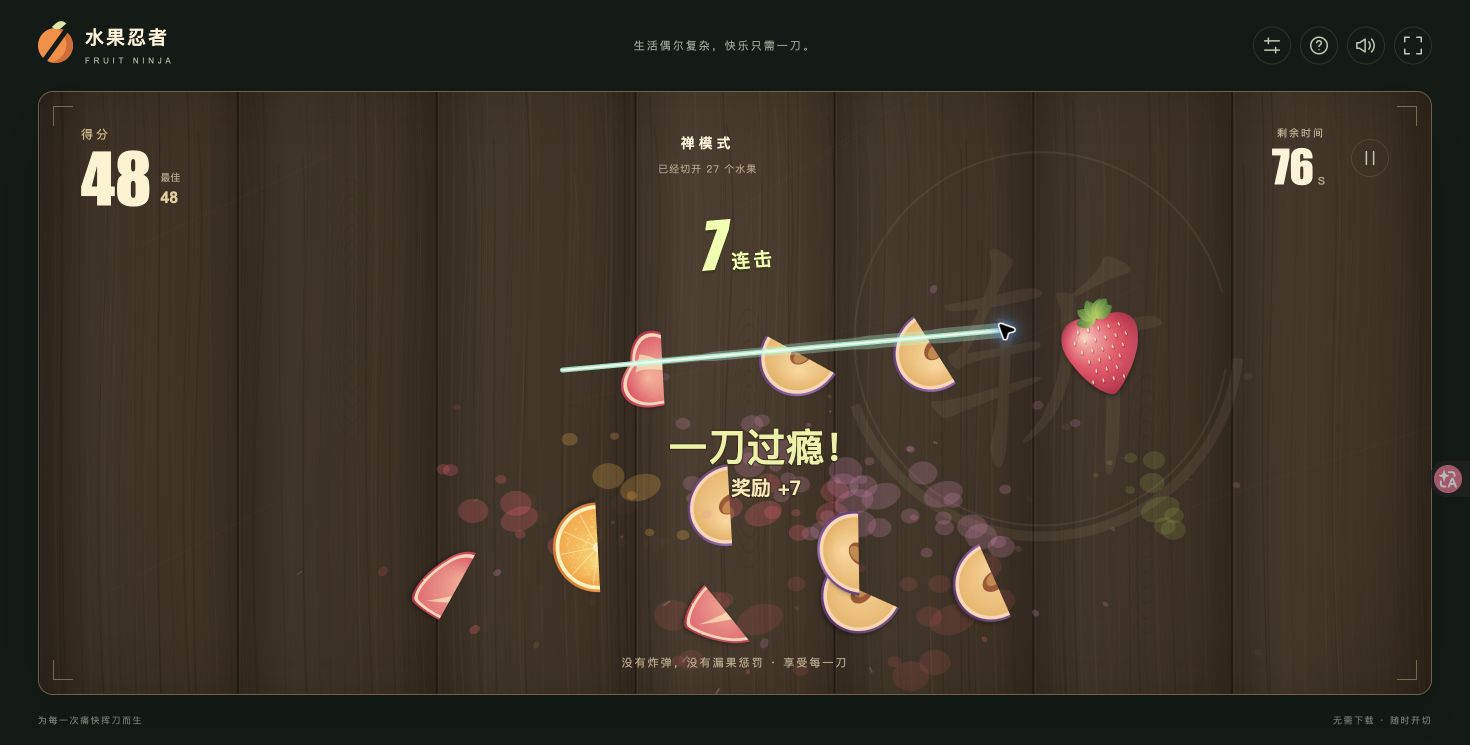
Fruit Ninja Dojo does not pretend otherwise. The catalogue entry calls it "an unofficial Fruit Ninja recreation" in its first line.
This is not new, it is the whole history
The catalogue’s most-starred entries tell the same story louder.
| Entry | ★ | What it is |
|---|---|---|
| Jelly Baby | 152 | A soft-body toy. Original. |
| Hit & Run in the browser | 136 | The 2003 Simpsons driving game, ported from a PS2 disc |
| One-Shot Games | 51 | Includes a "tap-to-flap" remaster — Flappy Bird’s mechanic, new art |
Number two is a port. Number three is a remaster. And the earlier waves brought a Sonic prototype in Godot, an Attack on Titan game, a Pacific Rim mecha battle, a Uma Musume auto-battler, a classic MapleStory attempt, and a Sudden Attack clone that a Korean forum passed around until its server fell over.
The model that can supposedly make anything is being pointed, again and again, at something specific that already exists.
Why the borrowed ones travel further
There is a practical reason, and it is not a moral failing.
A recreation ships with its design already done. Nobody has to be taught what Dust2 is, what fruit-slicing is, what a needle-and-dash roguelite feels like. The prompt can spend all of its ~470 characters on execution because the specification is in the reader’s head already. And the link travels, because the title is the pitch.
The original ones carry the opposite burden. The Road to Kufa — desert traversal on foot or horseback, oasis towns, landmarks, no combat — is the most beautiful thing in the batch and the hardest to explain in a sentence.
Last Train to the Sea puts you on a winged tram between five towns above the clouds, balancing the carriage and carrying passengers. Vesper: The Last Light is a third-person puzzle adventure through drowned gardens where you manage light. Both are more interesting than a Fruit Ninja clone. Neither is going to trend.
The one that broke the pattern
Jelly Baby, the most-starred thing in the catalogue at 152, is a green blob on a sunlit tabletop with a trampoline and a swing. No score. No fail state. Nothing to win.
It is also not really a game, which may be exactly why it is not a copy. Freed from having to be a game, it did not have to be a game anybody remembered. What it offers instead is a feeling — 25 MB of soft-body physics compiled to WebGPU so that a jelly squashes correctly when it lands.
The lesson is not "originality wins" — it clearly does not, in stars or in links. It is narrower: when the output does not have to justify itself as a genre, it stops reaching for a genre.
What it says about the tool, if anything
Careful here, because the obvious reading is probably wrong. This is not evidence that Astra cannot do original work. Every one of the six originals in yesterday’s batch is also Astra output. What the split measures is what people ask for when a build costs an hour instead of a year.
When making a thing was expensive, you only rebuilt something if you had a reason. At an hour a go, the cheapest possible brief is the one you do not have to write — and that brief is always a game you already love.
The interesting question is not whether the tool is creative. It is whether anything changes once the novelty of "it made Dust2" wears off, and the only way to get attention is to have had an idea.
Twelve new entries counted from the awesome-gpt-6-astra catalogue, 2026-09-15 additions; all opened in a browser on 2026-09-16 (eleven load, one does not answer). Star figures from the GitHub API, same day. Screenshots from the catalogue, whose curated text and artwork are CC0 1.0. Genre classification above is my own judgement, not the catalogue’s.
← Back to all posts